
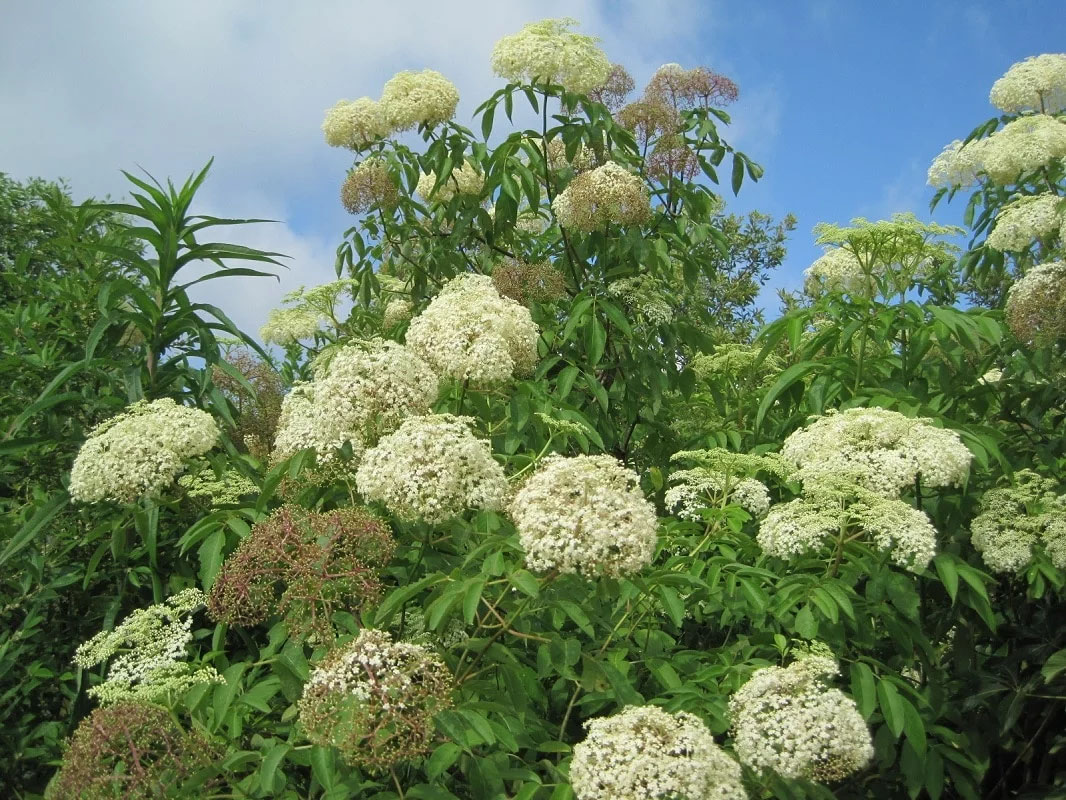
American Elder (Sambucus canadensis) is the generous grandmother of the hedgerow. It offers clouds of fragrant flowers in early summer, clusters of dark berries in late summer, and enough folklore to fill an entire bookshelf. If you've ever enjoyed elderberry syrup during cold season, chances are you've already met this remarkable native shrub.
Found along streambanks, woodland edges, fence rows, and moist meadows throughout much of North America, elderberry is as useful to wildlife as it is to people. Birds adore the berries, pollinators flock to the flowers, and herbalists have been singing its praises for generations.
Flowers
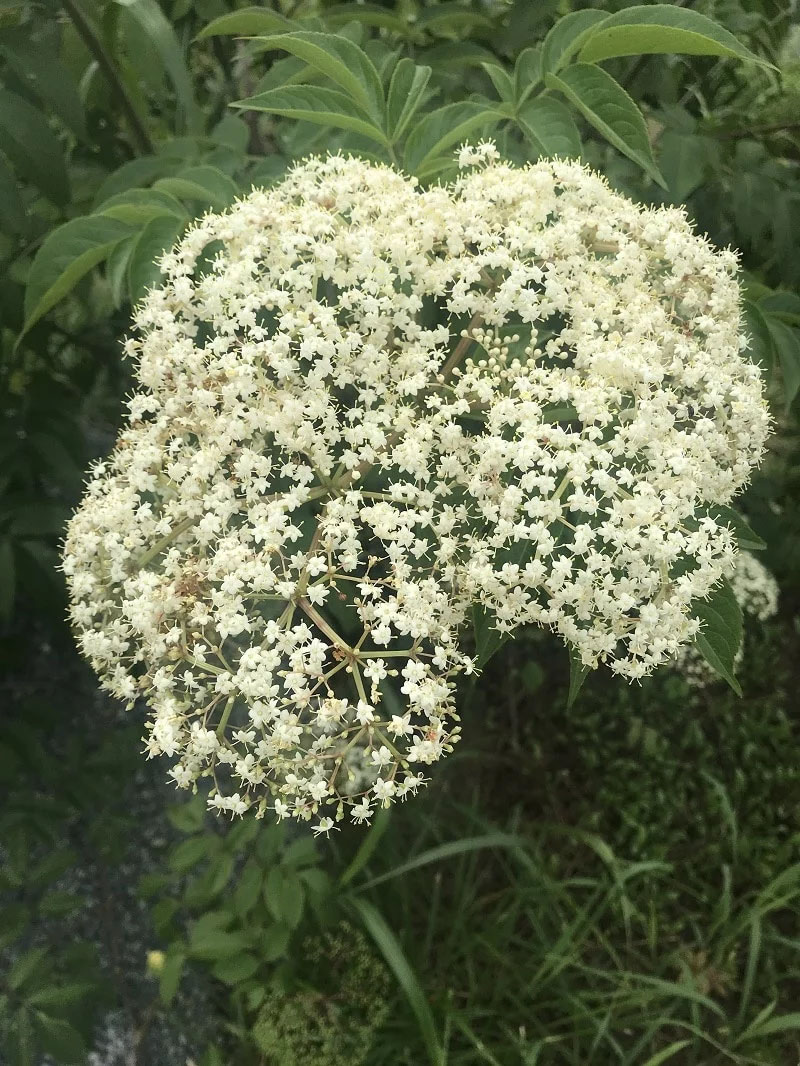
American Elderberry produces large, flat-topped clusters of creamy white flowers called umbels. Blooming from late spring through early summer, the blossoms are sweetly fragrant and attract bees, butterflies, and other beneficial insects.
Each flower is tiny on its own, but together they create broad floral platforms that can reach 10 inches (25cm) across.
Leaves
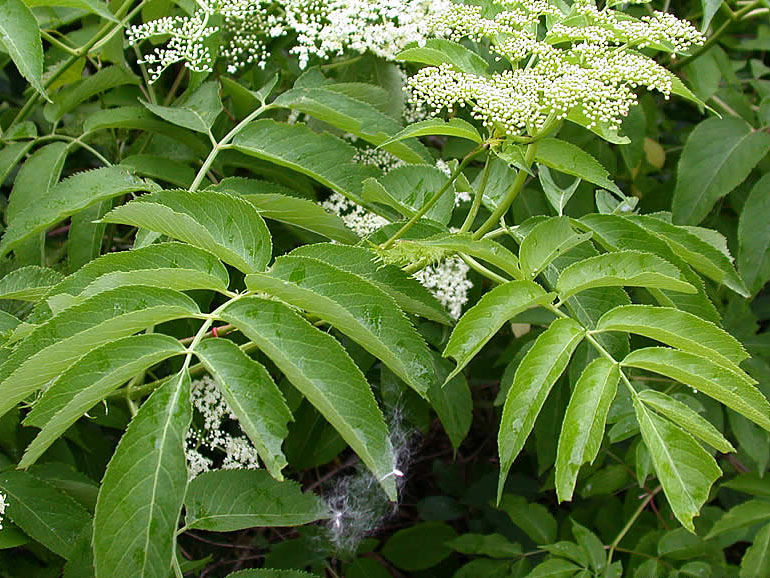
Leaves are opposite and compound, consisting of 5–11 serrated leaflets arranged along a central stem. They are bright green during the growing season and can give off a slightly musky scent when crushed.
The shrub itself typically grows 5–12 feet (1.5–3.5m) tall and often forms colonies through underground runners.
Edible Parts
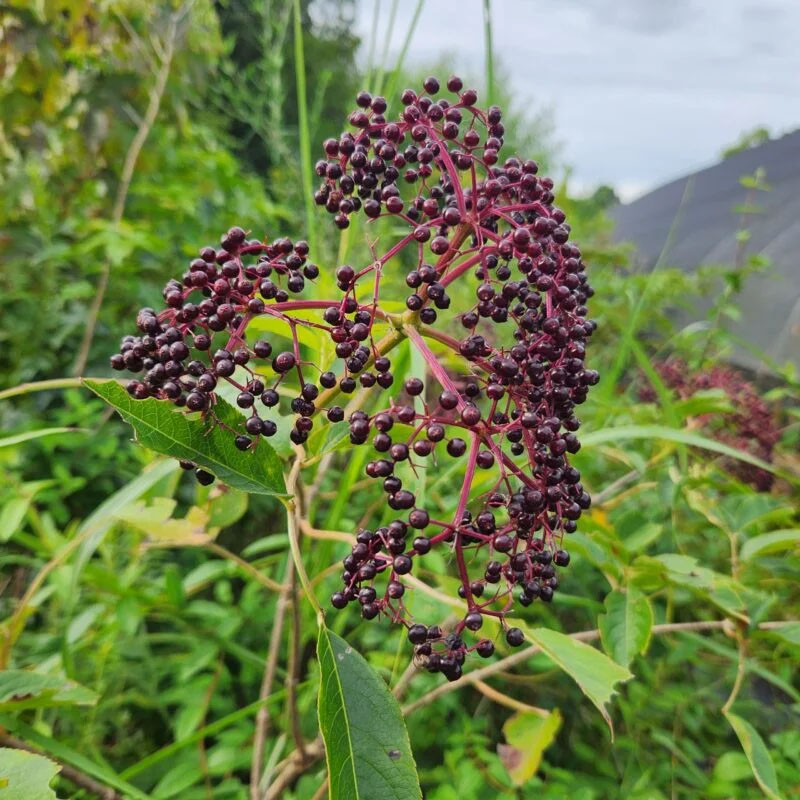
The flowers and ripe berries are the stars of the show.
- Flowers can be used fresh or dried in teas, fritters, cordials, and syrups.
- Berries should always be cooked before consumption. They are rich in antioxidants, vitamins, and flavonoids.
*Leaves, stems, roots, bark, and unripe berries contain compounds that can cause nausea and digestive upset and should not be consumed.
Key Medicinal Uses
Elderberry has earned its reputation as one of North America's favorite herbal allies.
Traditionally, the berries have been used to support the immune system during cold and flu season. Modern research has explored their antiviral, antioxidant, and anti-inflammatory properties.
The flowers have also been used in teas to encourage perspiration during fevers and to soothe seasonal discomforts.
How to Harvest and Use
Harvest flowers when the blossoms are fully open and fragrant. Dry them in a cool, shaded area for teas and infusions.
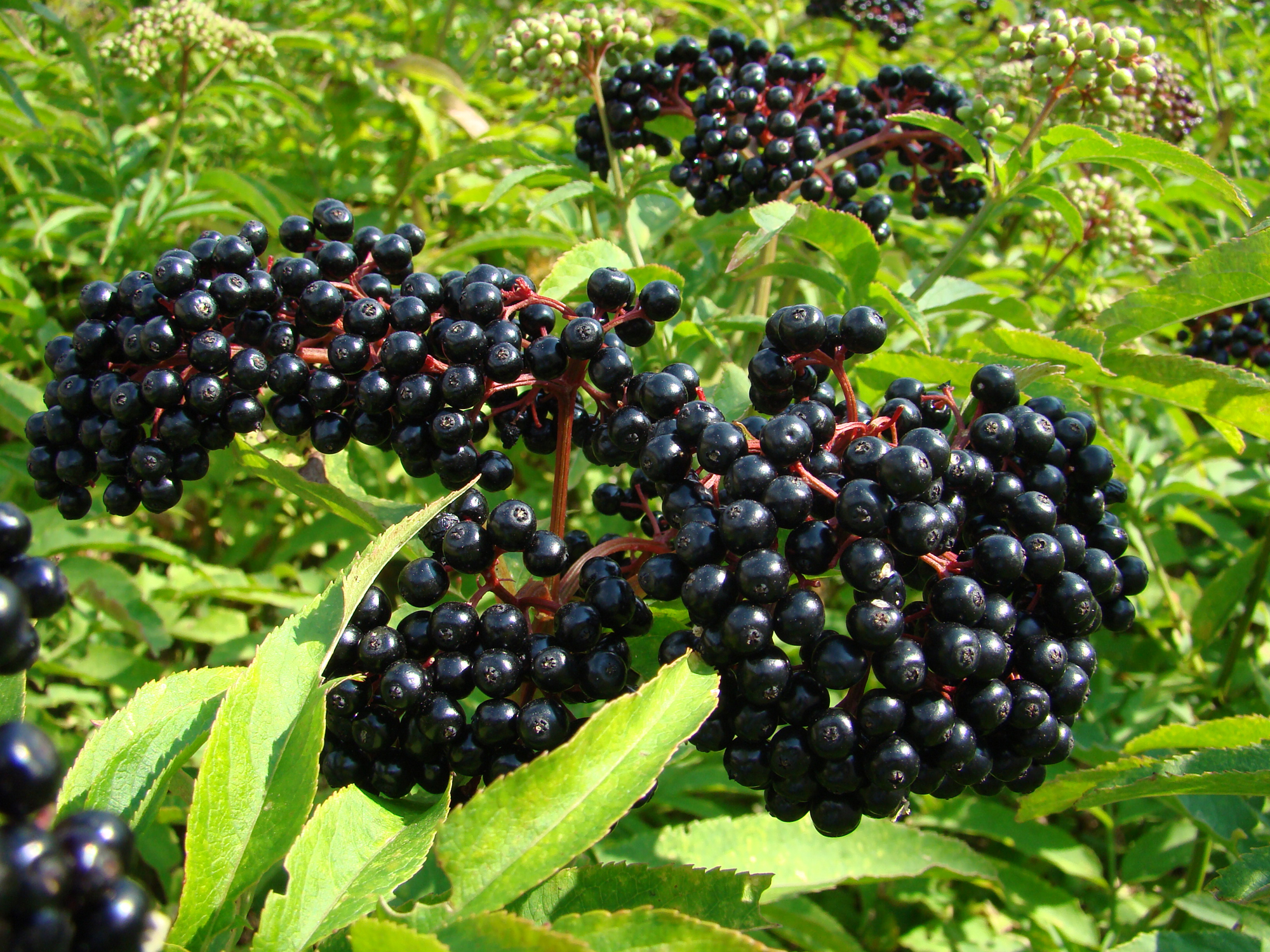
Harvest berries when they are fully ripe—deep purple-black and hanging heavily from the stems. Remove berries from their stems with a fork and cook them before using.
Elderberries shine in syrups, jams, jellies, pies, wines, and cordials.
Field Use
American Elderberry is a wildlife powerhouse. More than 50 species of birds feed on the berries, while countless pollinators visit the flowers.
The hollow stems were once used by Indigenous peoples and early settlers to make whistles, flutes, and blowguns. Some traditions even planted elder near homes for protection and good fortune.
In restoration projects, elderberry is often planted to stabilize streambanks and provide valuable habitat.
And that's it for this one. I'm Melissa, and this is Backyard Botanist.
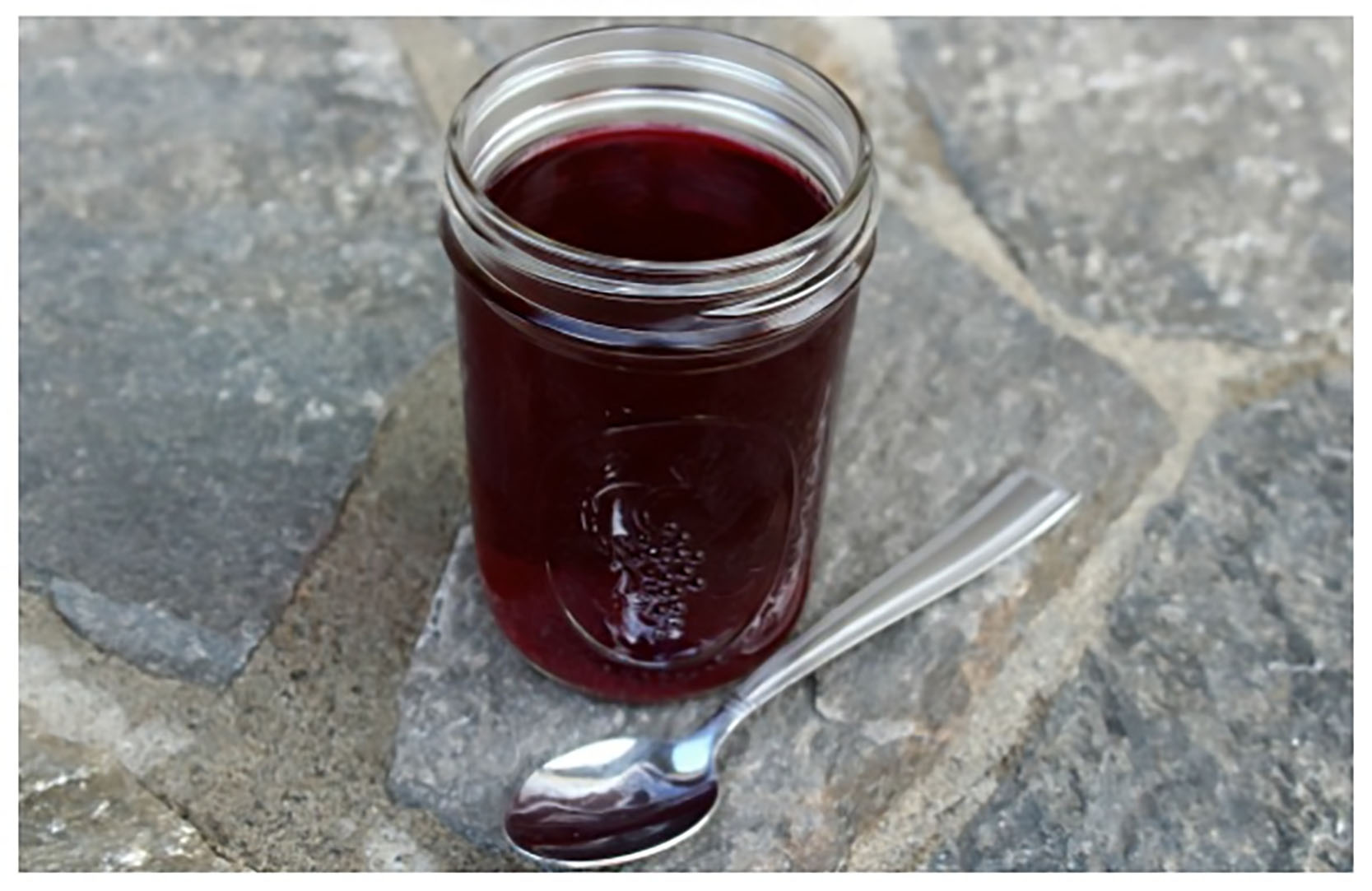
Backyard Botanist Elderberry Syrup
Ingredients:
- 1 cup dried elderberries
- 4 cups water
- 1 cinnamon stick
- 1 teaspoon dried ginger
- 3–4 whole cloves
- 1 cup raw local honey
Instructions:
- Combine elderberries, water, cinnamon, ginger, and cloves in a saucepan.
- Bring to a gentle boil.
- Reduce heat and simmer for 45–60 minutes, until the liquid is reduced by about half.
- Remove from heat and allow to cool slightly.
- Strain through a fine mesh strainer or cheesecloth.
- Stir in the honey while the liquid is still warm but not hot.
- Pour into a clean glass jar or bottle and refrigerate.
Notes:
- Keeps for approximately 2–3 months in the refrigerator.
- Delicious added to tea, sparkling water, pancakes, or drizzled over yogurt.
- Many herbalists take a spoonful daily during cold and flu season.