
Last time on Backyard Botanist, we learned the secrets of the Spotted Touch-Me-Not. In this, our first toxic edition, we hone in on poison Hemlock.
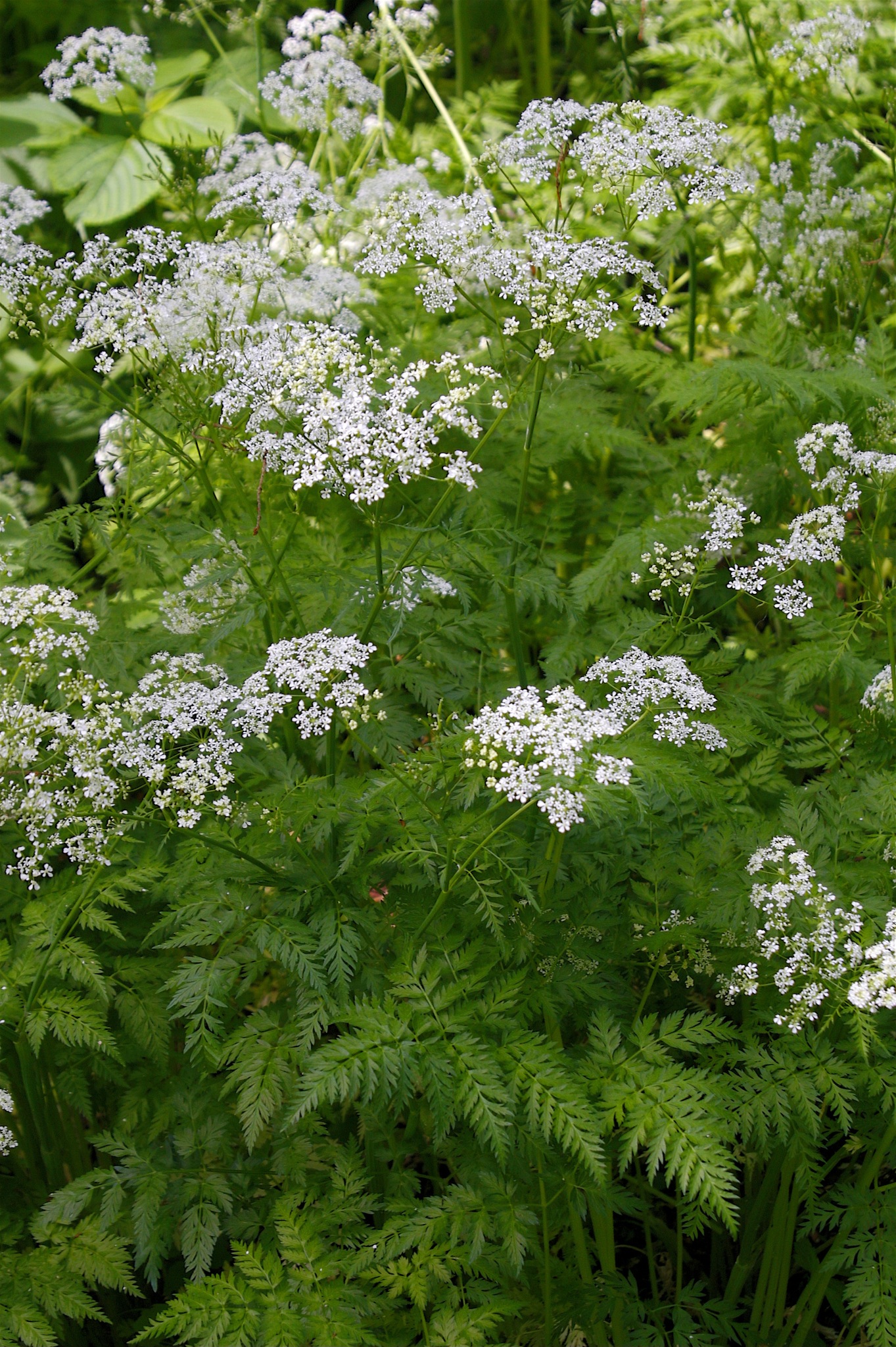
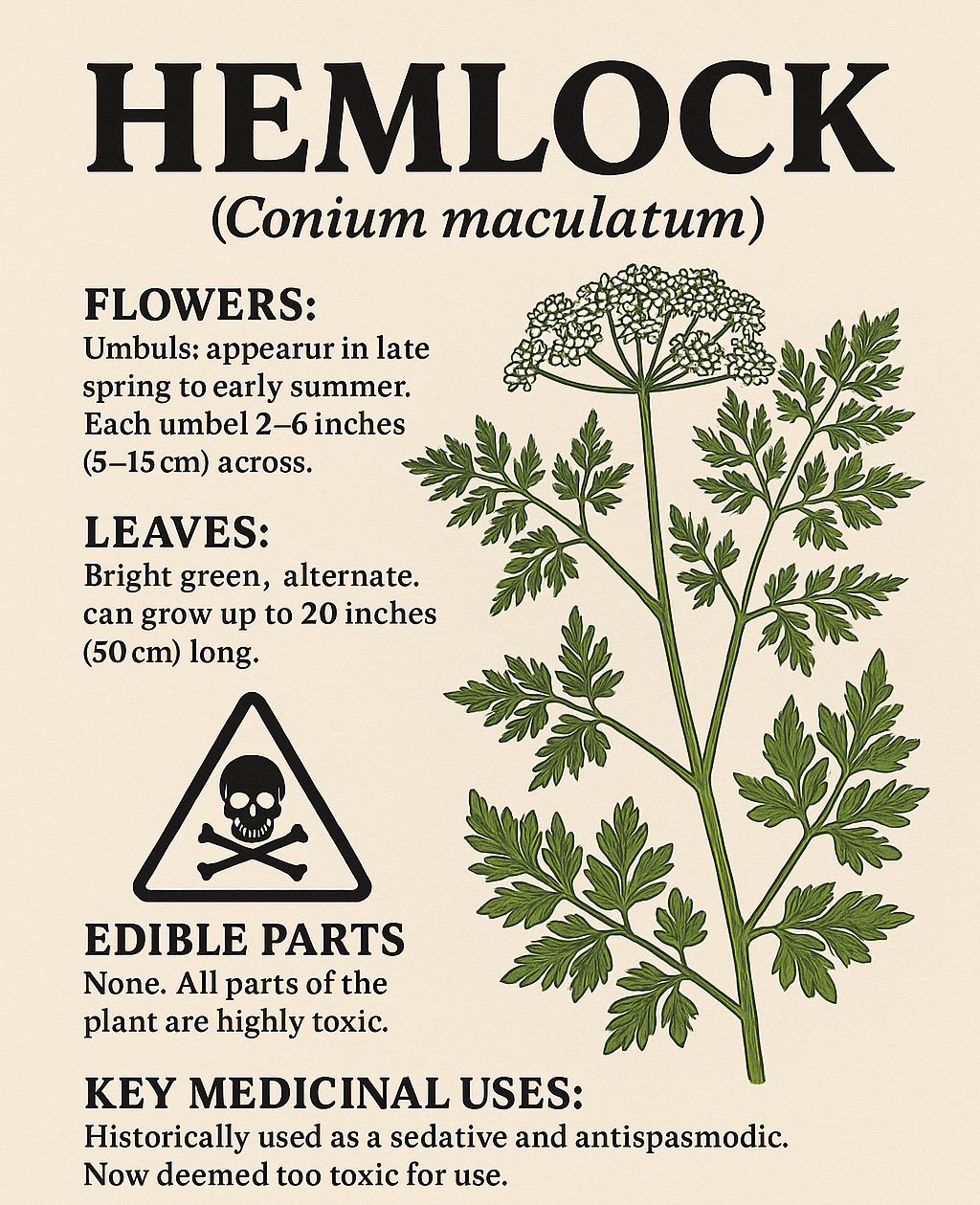
Hemlock (Conium maculatum) is a tall, lacy-leaved biennial in the carrot family (Apiaceae), if you can believe it. It's pretty, but it packs a powerful punch. With delicate white flowers and ferny foliage, it may be mistaken for Queen Anne’s Lace—but this plant has a murderous past and a toxic present. Hemlock is not your average wildflower. It’s best admired from a distance, preferably.
Native to Europe and North Africa, Hemlock has spread widely across North America, where it thrives in disturbed areas—along roadsides, riverbanks, and fields.
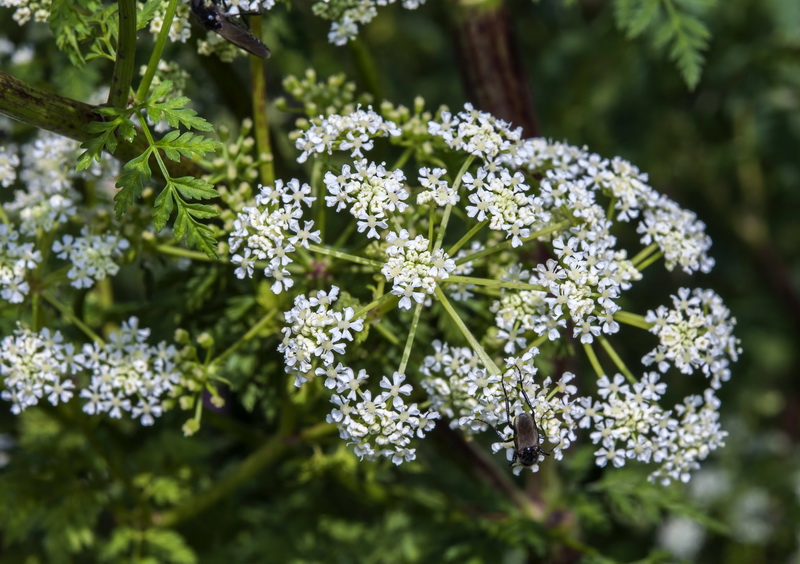
Flowers:
Umbels (umbrella-shaped clusters) of tiny white flowers appear in late spring to early summer. Each umbel measures approximately 2–6 inches (5–15cm) across and is made up of dozens of five-petaled flowers. They smell... pretty gross. Not quite as bad as a Bradford Pear tree, depending on who you ask. Think musty mouse nest or old celery.
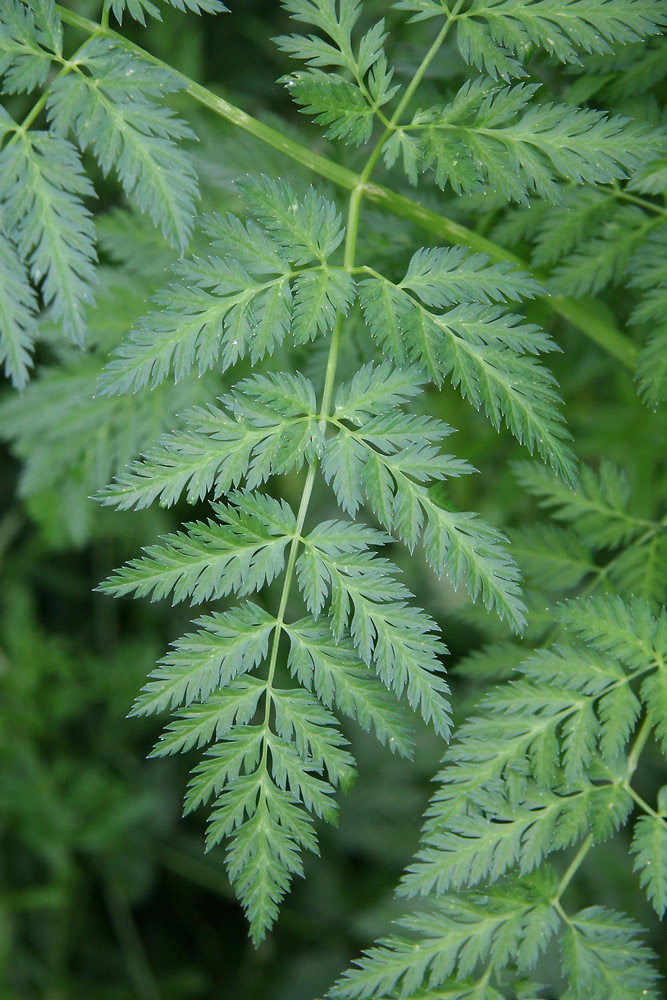
Leaves:
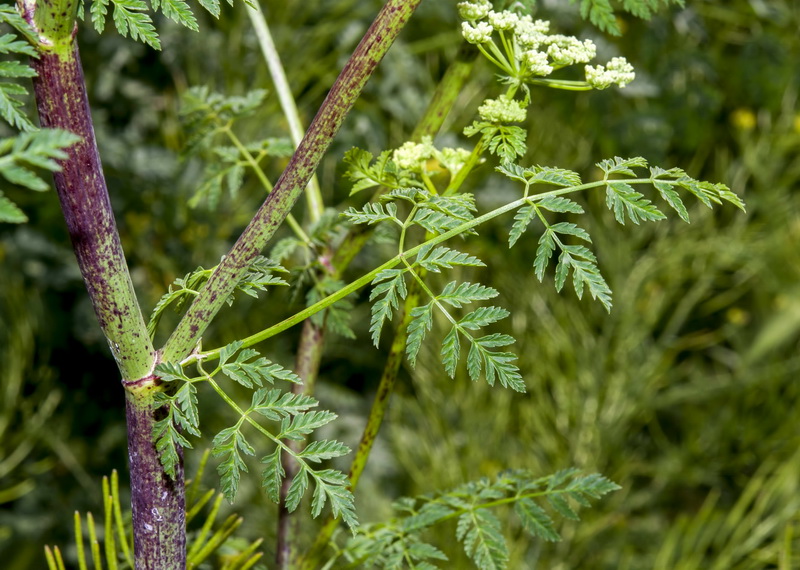
Finely divided and feather-like, the leaves are bright green, alternate, and can grow up to 20 inches (50cm) long. They resemble parsley or wild carrot leaves but are glossier and more delicate. The stems are key to identification: hairless, hollow, and streaked with purple blotches.
Edible parts: None
Do NOT eat any part of this plant. Hemlock contains several potent alkaloids (especially coniine) that affect the nervous system and can cause respiratory paralysis. Just handling it can cause skin irritation in some people. When in doubt, leave it out—and this one is always out.
Key medicinal uses:
Historically, Hemlock was used as a sedative or antispasmodic in small, extremely risky doses by physicians who clearly had nerves of steel. These days, it's best left to medical textbooks and cautionary tales. Its primary modern use is as an object lesson in plant identification and humility.
How to harvest and use:
You don’t. But you should learn to recognize it. That knowledge could save a life. Compare with edible look-alikes like wild carrot or cow parsnip—but always check for those purple-splotched stems and that sour-musty odor when crushed.
Field use:
No real field use—unless your field use is warning others or making dramatic, Socratic gestures at the roadside. That said, Hemlock’s presence can indicate disturbed, nutrient-rich soil. Some conservationists remove it to protect native flora.
And that’s it for this one. I’m Melissa, and this is Backyard Botanist.
Next time on Backyard Botanist, we investigate the strange world of ground cherries (Physalis spp.)—because who doesn’t love a snack that comes in its own lantern?