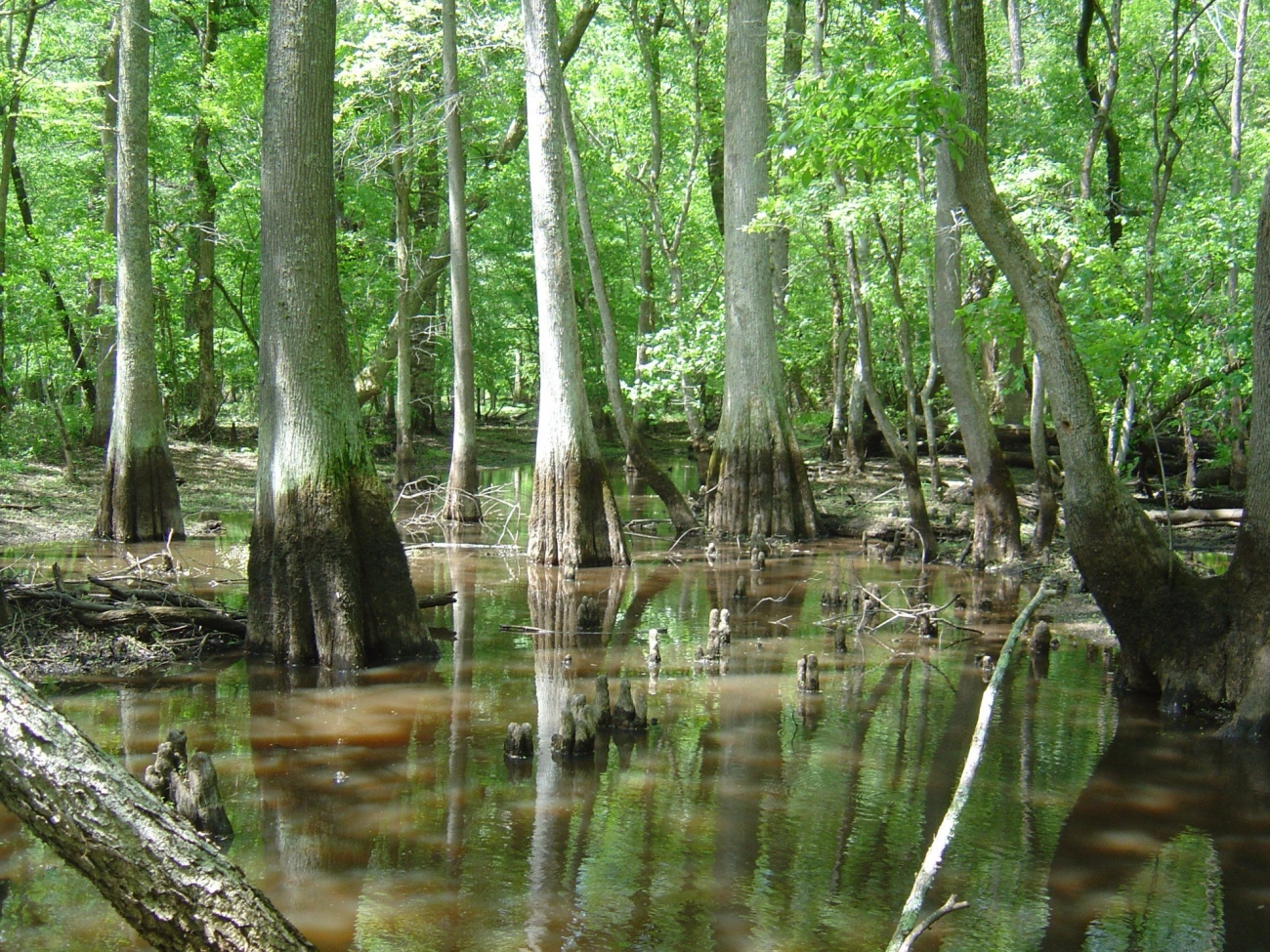
Somewhere beneath the shadowed canopy of a bottomland forest, a winged hunter patrols the water.
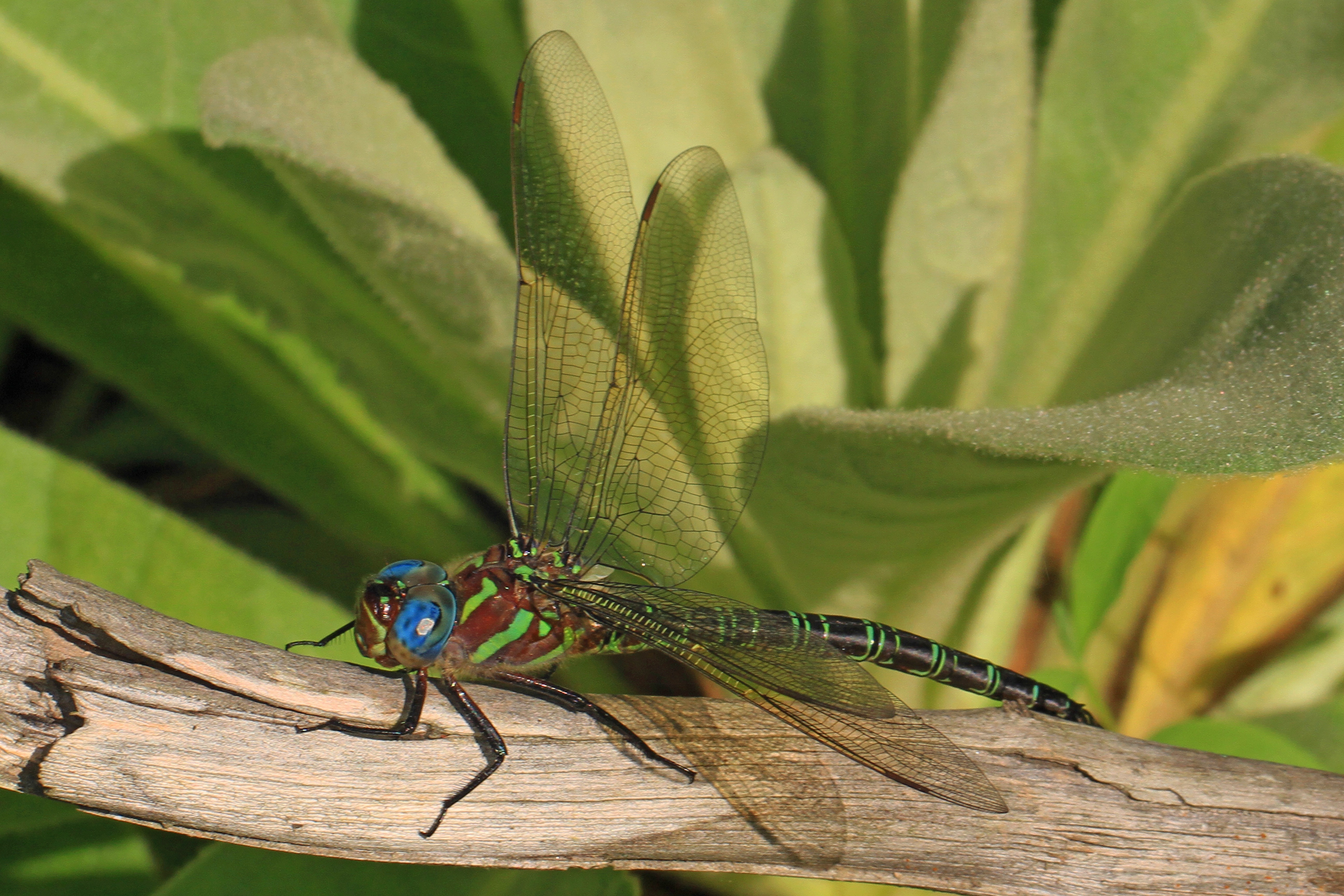
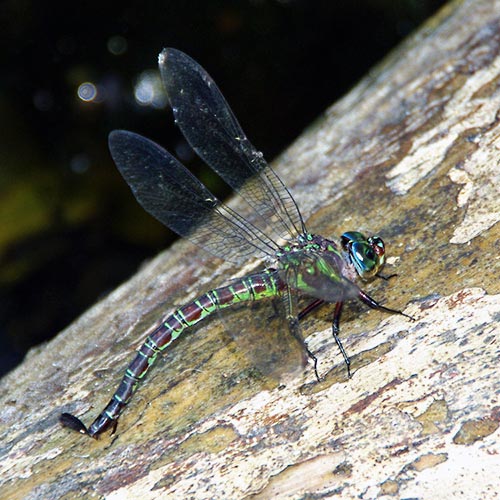
It's large, fast, and beautifully striking. Its dark brown body is marked with slender green rings, while the males carry enormous blue eyes that seem almost too vivid for the woodland around them. With a body that can approach four inches in length, the Swamp Darner is among the largest dragonflies in the United States.
Its scientific name, *Epiaeschna heros*, feels appropriately grand. This is no dainty garden visitor resting politely on a flower stem. The Swamp Darner is a powerful aerial predator built for navigating wooded wetlands, shaded pools, sluggish streams, and the tangled edges of the swamp.
It's exactly the sort of creature one would expect to find guarding the wild water.
Meet the Swamp Darner
The Swamp Darner belongs to the family Aeshnidae, a group of large, strong-flying dragonflies commonly known as darners. It's the only living species in the genus *Epiaeschna*, making it the sole surviving representative of its particular evolutionary branch.
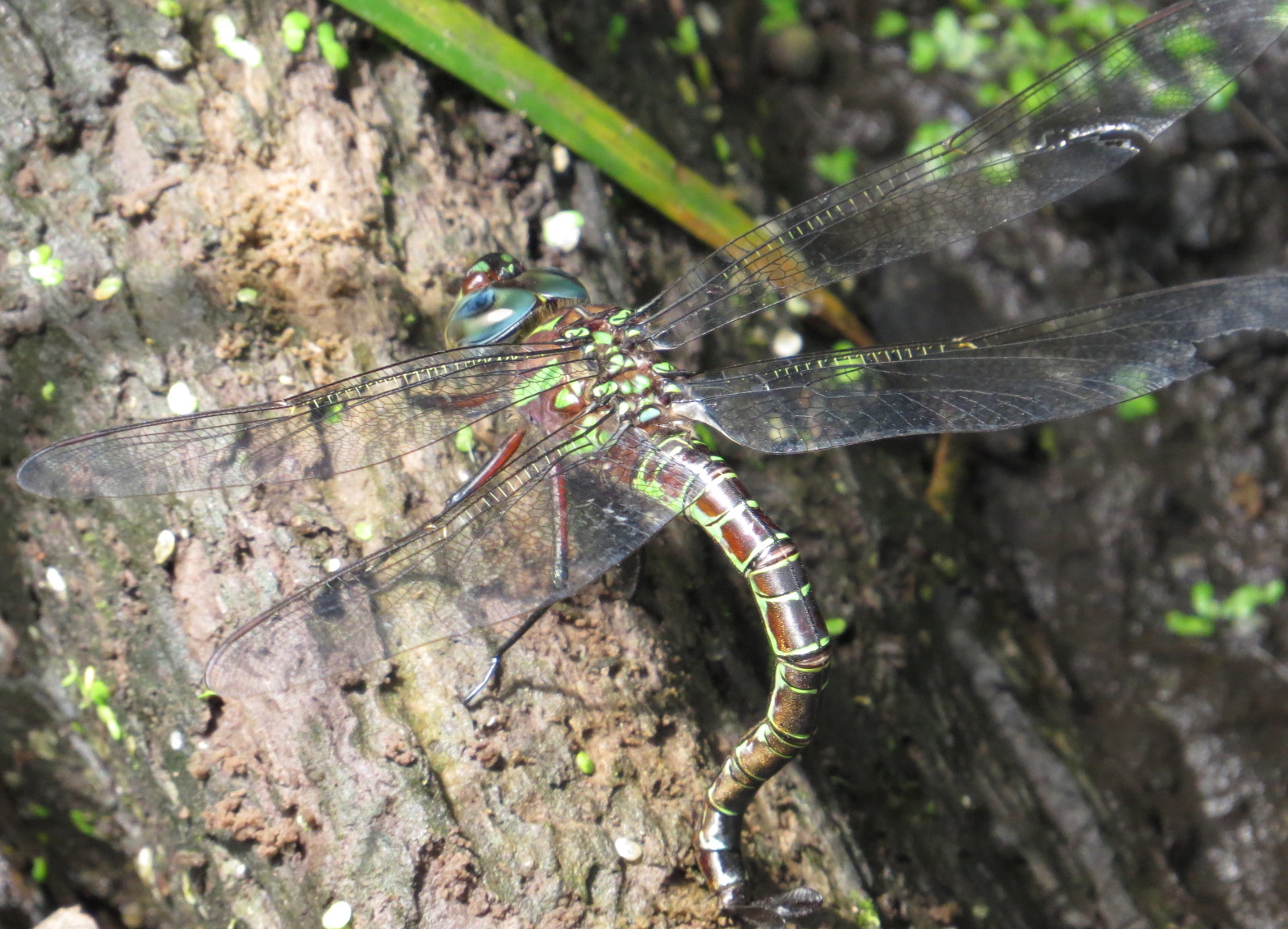
Adults are predominantly dark brown, with green stripes across the thorax and extremely narrow green or bluish rings around the abdomen. Males will usually have brilliant blue eyes, while females tend to have brown eyes and heavier bodies.
Swamp Darners are found primarily throughout the eastern United States and into southeastern Canada. In Illinois, they occur statewide and are considered a native, common species. Sightings may still feel uncommon though, because these dragonflies often fly high, move quickly, and spend much of their time around wooded wetlands rather than open ponds.
A Life Divided Between Water and Sky
Like all dragonflies, the Swamp Darner lives two very different lives.
Its earliest stage unfolds underwater. After hatching, the young dragonfly - called a nymph or naiad - lives among submerged vegetation, mud, roots, fallen leaves, and woody debris. There, it behaves as an aquatic predator, feeding on other small animals and growing through a series of molts.
When the nymph is ready to transform, it climbs out of the water onto a stem, root, log, or any firm surface. Its outer skin splits, and the adult dragonfly slowly pulls itself free. The new wings expand and harden before the Swamp Darner takes its first flight into the forest.
Adult males patrol swamps and slow-moving streams in search of females. Mating generally occurs away from the water, possibly among nearby trees. Females later return to suitable wetland habitat and deposit their eggs in mud, plant stems, or damp areas along or just above the waterline. They may even place eggs in the moist mud of a temporary pond after the visible water has disappeared.
This ability to use shallow and sometimes seasonal woodland pools makes the Swamp Darner especially well suited to floodplain forests and wetlands that naturally fill and dry throughout the year.
The Aerial Hunter of the Wetlands
Swamp Darners are formidable predators. Beautifully evolved creatures.
Their large compound eyes give them an enormous field of vision, while their four wings can move independently, allowing them to accelerate, hover, turn abruptly, and intercept prey in midair.
Rather than landing to eat, a Swamp Darner may capture an insect with its legs, form a small basket around the prey, and begin eating while still in flight.
Adults feed on flying insects and have been observed gathering where winged ants or termites emerge in great numbers. They frequently hunt high above the ground, which helps explain why such a large insect can remain surprisingly difficult to observe.
Despite their intimidating size, Swamp Darners do not sting and have no interest in attacking people. Like most dragonflies, they generally use their speed to escape rather than confront anything much larger than themselves.
Why the Swamp Darner Matters
The Swamp Darner is more than an impressive flash of wings over dark water. It occupies several important positions within the wetland food web. One such job is natural insect control.
Both young and adult Swamp Darners are predators. Aquatic nymphs consume small organisms living beneath the water, while adults hunt flying insects above it. Their diet can include flies, midges, winged ants, termites, mosquitoes, and other small insects.
No single dragonfly species can eliminate mosquitoes from an area, but together, dragonflies form part of the natural network of predators that helps keep insect populations in balance.
There is always a flip-side in nature for wildlife, however. The hunter is also hunted.
Dragonfly nymphs may be eaten by fish, wading birds, and other aquatic predators. Adults can become prey for birds, spiders, frogs, and larger insects.
Therefore, the Swamp Darner transfers energy from small aquatic and flying insects to animals higher in the food web. If you were to remove enough insects from a wetland, the effects would travel outward to the birds, amphibians, fish, reptiles, and mammals that depend on them.
A Connection Between Water and Land
Because Swamp Darners begin their lives underwater and later become flying terrestrial predators, they carry nutrients from aquatic environments into the surrounding forest.
When an adult dragonfly emerges, it takes energy gathered in the wetland and moves it into the woodland food web. A bird catching a dragonfly over the trees is, in a very real sense, receiving nourishment produced beneath the water.
Did you know that dragonflies are a sign of thriving wetlands?
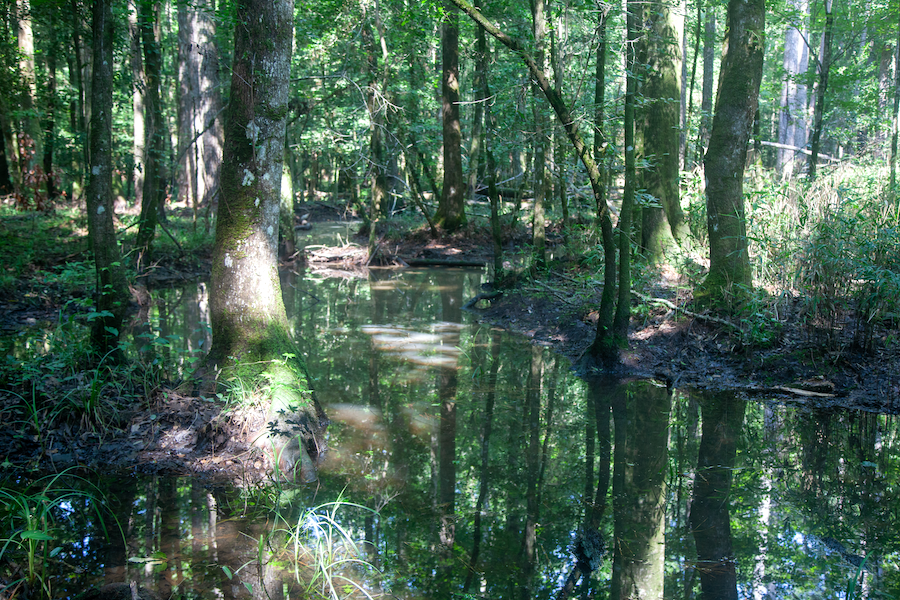
Dragonfly diversity can tell us a great deal about the health and variety of freshwater habitats. The presence of Swamp Darners suggests that an area still contains some combination of shallow water, wet mud, shaded pools, slow streams, bottomland forest, and undisturbed wetland edges. Because the species depends on both aquatic breeding areas and surrounding woodland, protecting only the water is not enough. The forest around it matters too.
Swamp Darners favor shaded or partially shaded wetlands, including:
* Forested swamps
* Bottomland hardwood forests
* Temporary woodland pools
* Shallow ponds
* Slow-moving streams
* Floodplain wetlands
* Muddy seasonal depressions
* Wetlands containing submerged roots, stems, leaves, and woody debris
In Wisconsin, the species is associated with shallow woodland ponds, including temporary ponds, as well as swamps and slow streams. Illinois records similarly connect the Swamp Darner with bottomland forests, rivers, streams, and swamps.
These places are sometimes dismissed as stagnant, overgrown, mosquito-ridden, or useless. To a Swamp Darner, they are nurseries.
Threats to the Swamp Darner
The Swamp Darner is considered secure across much of its total range, but that doesn't mean every regional population is safe. It's rare or poorly documented in portions of its northern range and is listed as a species of Special Concern in Maine, so there's that. Its greatest vulnerabilities are tied to the loss or alteration of wetlands and surrounding forests.
Potential threats include:
Wetland Drainage and Development:
When shallow pools, swamps, or floodplain depressions are drained, filled, dredged, or converted into developed land, the Swamp Darner loses the water and soft wet substrates needed for reproduction.
Removal of Bottomland Forest:
Clearing trees around wetlands exposes shaded water to more sunlight, changes water temperature, increases evaporation, and removes adult hunting and resting habitat. A pond without its surrounding forest may no longer function as the same ecosystem.
Pesticide Use:
Broad-spectrum insecticides can kill not only pest species but also dragonflies and the smaller insects they depend upon for food. Runoff may also carry chemicals into the aquatic habitat where dragonfly nymphs develop.
Wildlife conservation plans increasingly recommend reducing pesticide impacts and using integrated pest-management practices whenever possible.
Polluted Runoff:
Fertilizers, oils, road salt, sediment, lawn chemicals, and other contaminants can wash into wetlands during rainstorms. These substances may alter water chemistry, reduce oxygen, encourage excessive algae growth, or smother the submerged habitat used by aquatic insects.
Over-Cleaning Wetland Edges:
Removing every fallen branch, dead stem, leaf pile, muddy patch, and decaying log may make a pond look tidier to human eyes, but it can erase vital habitat. Why would you even do that? The swamp does not require housekeeping.
Swamp Darners use messy places. Mud, stems, roots, leaves, and partially submerged wood provide hunting areas, shelter, egg-laying sites, and places from which adults can emerge.
How Can You Help the Swamp Darner?
You do not need to own acres of wetland to make a difference. Small choices made by homeowners, gardeners, hikers, land managers, and local communities can collectively protect entire generations of aquatic insects. I've listed a few ideas below.
1.) Protect Temporary Water
Do not assume a shallow pool is lifeless simply because it dries during part of the year. Seasonal woodland pools and flooded depressions may contain dragonfly eggs or nymphs, as well as amphibians and other organisms adapted to changing water levels. Avoid filling, draining, or driving through these areas.
2.) Preserve Trees Around Wetlands
Maintain native trees, shrubs, and ground vegetation around ponds, streams, ditches, and swampy areas. Forested buffers provide shade, filter runoff, stabilize soil, and give adult dragonflies protected places to hunt and rest.
3.) Leave Some Natural Debris
Allow some fallen leaves, branches, logs, and dead plant stems to remain near wetland edges. Natural debris is not automatically waste. In a functioning wetland, it becomes shelter, hunting structure, egg-laying material, and eventually food for decomposers.
4.) Reduce Pesticide Use
Avoid routine spraying for mosquitoes or other insects whenever possible, particularly near water. Instead, remove artificial containers of stagnant water, repair clogged gutters, encourage natural predators, and use targeted pest-control methods only when necessary.
5.) Plant Native Vegetation
Native sedges, rushes, grasses, shrubs, and wetland plants help stabilize shorelines and provide structure for emerging dragonflies. Choose species suited to your local region and moisture conditions rather than introducing aggressive ornamental plants that may escape into natural wetlands.
6.) Keep Pollutants Out of Storm Drains
Storm drains often carry runoff directly into nearby streams and wetlands. Never pour paint, oil, chemicals, or yard waste into a storm drain. Use fertilizers sparingly, repair vehicle leaks, and prevent loose soil from washing away during landscaping projects.
7.) Support Wetland Conservation
Support local land trusts, wildlife refuges, watershed groups, and conservation organizations working to protect floodplains, bottomland forests, and seasonal wetlands. Public comments, volunteer hours, donations, native planting projects, and informed voting can all help keep vulnerable habitat intact.
8.) Record Your Sightings
Photograph dragonflies without capturing or disturbing them and submit observations to a reputable community-science project. Regional conservation agencies still need better information about the distribution, breeding activity, and habitat use of many dragonfly species. Surveying and public education are specifically identified as valuable conservation actions for understudied species such as the Swamp Darner.
You Want Some Fun Facts About the Swamp Darner?
**It is enormous by dragonfly standards.**
Adults measure approximately 80 to 94 millimeters long, or roughly 3.1 to 3.7 inches. Their hindwings alone may reach about 60 millimeters in length.
**It is the last of its living genus.**
The Swamp Darner is the only living species currently placed in the genus *Epiaeschna*. Several extinct species from the genus are known from fossils, suggesting that its ancient relatives once occupied a much broader part of the world.
**Its markings are rings rather than large spots.**
The narrow green rings around its dark abdomen help distinguish it from similar darners, which often have larger mosaic-like patches of color.
**It sometimes travels.**
Swamp Darners appear to be at least somewhat migratory, especially along the Atlantic Coast, and some northern populations may be replenished by individuals arriving from farther south.
**It may hunt far above your head.**
Swamp Darners often feed high in the air, sometimes gathering around large swarms of winged ants or termites. You may be standing directly beneath one without realizing it.
**Females do not always need open water to lay eggs.**
They may place eggs in wet mud, plant stems, or the damp soil of a seasonal pond that has already dried. The eggs can remain in place until water returns.
**Males patrol their territory like tiny aircraft.**
They cruise repeatedly over streams and swamps while searching for females, turning and accelerating with startling speed.
**It does not want to sew your mouth shut.**
Old folklore sometimes claimed that darners could stitch together the lips or ears of misbehaving children. The name actually comes from their long, needle-shaped bodies. They possess neither thread nor an interest in enforcing good behavior.
Let These Wet Places Remain Wild
The Swamp Darner is easy to admire once it takes to the air. The harder, and more important, task is learning to value the places that created it.
Before the shining wings, before the blue eyes and impossible aerial turns, there was a young predator waiting beneath dark water. There was mud. There were flooded roots, drowned leaves, fallen branches, mosquito larvae, seasonal rain, and the sheltering shade of bottomland trees.
Protecting the Swamp Darner means protecting all of it. Not simply the beautiful adult dragonfly, but the murky nursery. Not only the open water, but the forest surrounding it. Not just the creature we can photograph, but the entire tangled system that made its life possible.