
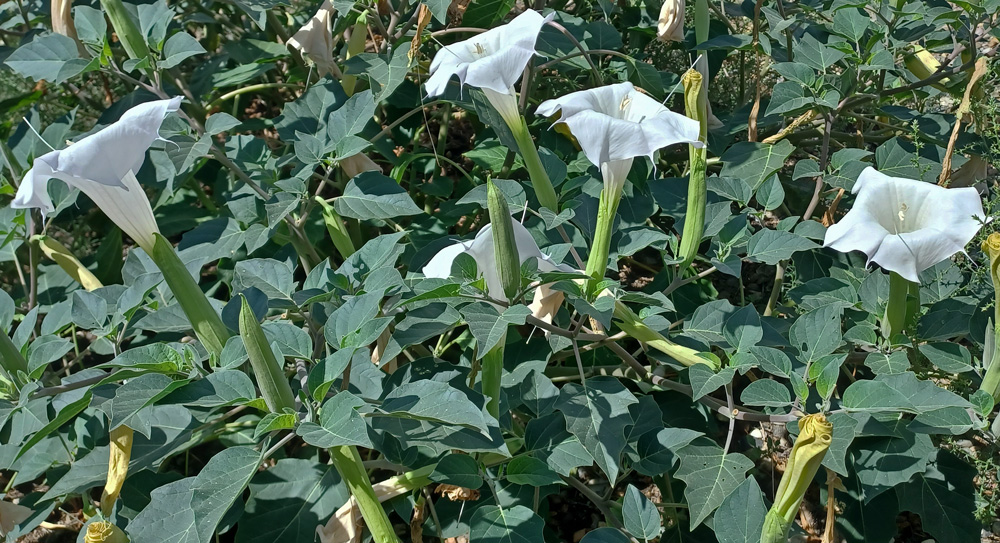
Datura (Datura stramonium) goes by many names: Thornapple, Jimsonweed, Devil’s trumpet, hell's bells, moonflower, or just “that spooky plant your grandma warned you about.” Sprawling across disturbed ground like it owns the place, this powerful and poisonous plant demands respect. Tall, trumpet-flowered, and nightshade-affiliated, Datura is both beautiful and potentially deadly.
It’s native to Central America but now grows wild across North America and much of the world, often found in pastures, fields, vacant lots, and roadside edges—especially where the soil has been recently disturbed.
Flowers:
Large, fragrant, trumpet-shaped flowers bloom in summer through fall, usually in shades of white to pale lavender. These blossoms unfurl in the evening, filling the air with a hauntingly sweet scent. Each flower only lasts a day or two, but the plant produces many throughout the season.
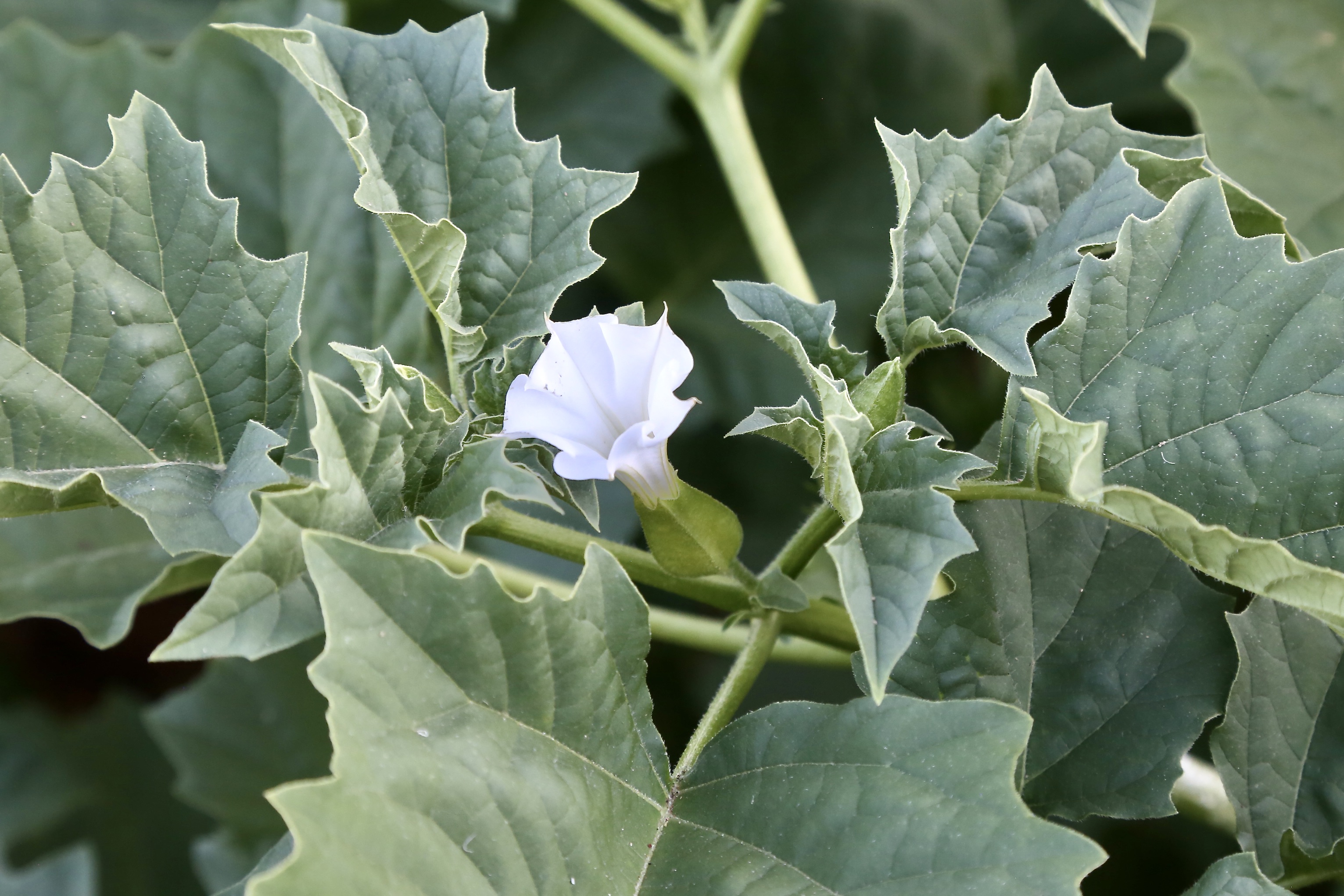
Leaves:
Broad, lobed, and deeply veined with a slightly wavy edge. Datura leaves are a dull green with a slightly fuzzy texture and a strong, unpleasant smell when crushed. They alternate along thick, hollow stems.
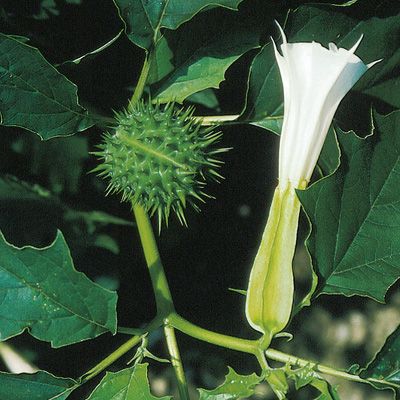
Fruit:
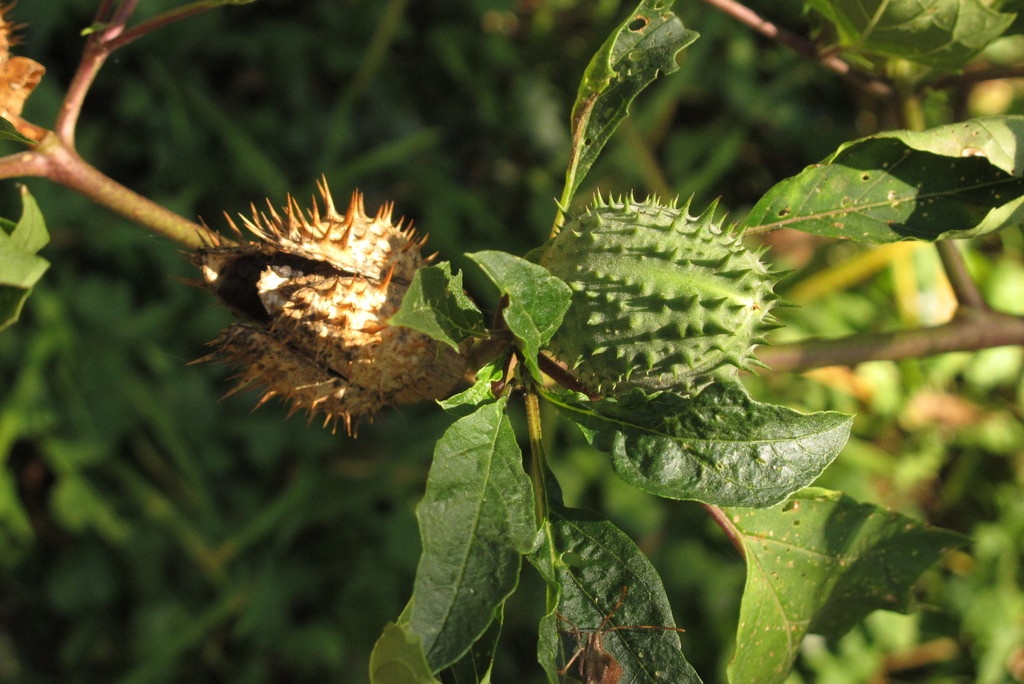
A round, spiky capsule that looks like a medieval weapon—hence the name Thornapple. The fruit dries and splits open to release dozens of small, mottled brown seeds. Every part of the plant is toxic—but the seeds and flowers are especially potent.
Toxic Parts:
All of them. Datura contains tropane alkaloids—primarily scopolamine, atropine, and hyoscyamine—which act on the nervous system. Even small amounts can cause hallucinations, delirium, and potentially fatal respiratory failure. There is no known safe dose. In short: admire it, don’t ingest it.
Traditional & Medicinal Lore:
Historically, Datura has been used (very cautiously) in traditional medicine by various cultures to treat asthma, muscle spasms, or as a sedative—but only by those with deep plant knowledge. Indigenous peoples, folk healers, and witches alike all treated it with reverence and care.
Because of its psychoactive properties, Datura has a long-standing place in ritual and mysticism. It was considered both visionary and dangerous—a plant of both revelation and madness.
Field Notes:
Datura is not a plant for beginners. While beautiful and ecologically interesting, it’s best appreciated as a visual and mythological marvel, not an herbal ally. If you see it in the wild, take a moment to observe the bees or hawk moths visiting its flowers, and then walk away—eyes open, hands off.
Witch’s Lore: The Flying Ointment of Old
Deep in European folklore, witches were said to use a “flying ointment” to aid their spiritual journeys—often applied to the skin (or broomstick handles) rather than consumed. These ointments were infused with trance-inducing plants like Datura, Belladonna, Henbane, and Mandrake—all members of the nightshade family.
While each recipe varied, Datura was often at the heart of the blend due to its powerful ability to induce vivid hallucinations, altered time perception, and dream-like states. But it came at a price: overdoses could (and still can) lead to permanent damage or death.
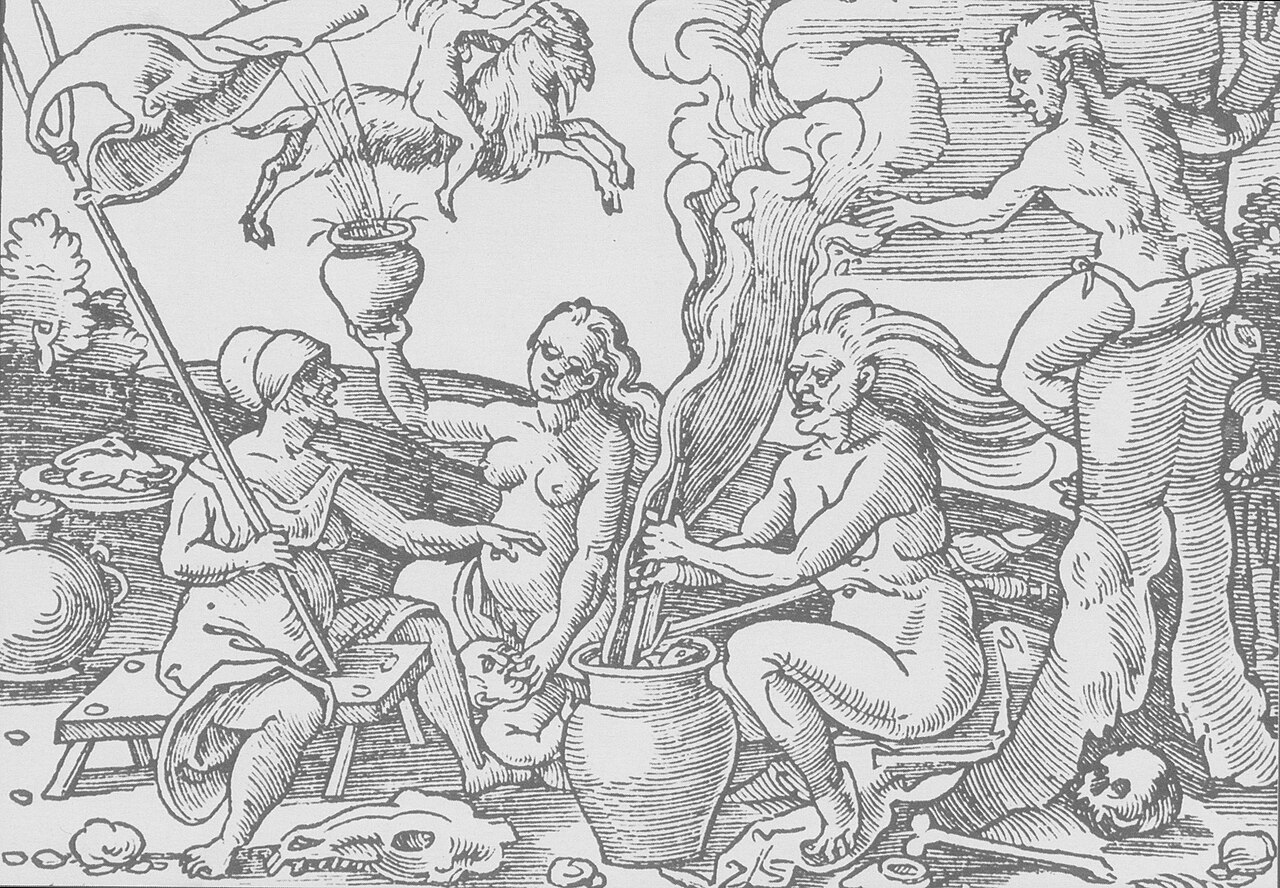
A Historical Flying Ointment Recipe (Do Not Attempt)
From a 15th-century grimoire:
Belladonna
Datura
Henbane
Mandrake root
Hog fat or goose grease (as a base)
Sometimes combined with poppy, wolfsbane, or yew
These were macerated and warmed into a salve. The ointment was then rubbed onto the skin, often near mucous membranes, for quicker absorption.
According to lore, the user would slip into a trance and "fly" to sabbats or other spiritual realms. In truth, many likely experienced fever dreams, wandering delirium, or unresponsive states.
Reminder: This lore is historical and mythological. Datura is extremely toxic. Never ingest, smoke, or apply it to your skin.
And that’s it for this one. I’m Melissa, and this is Backyard Botanist.