
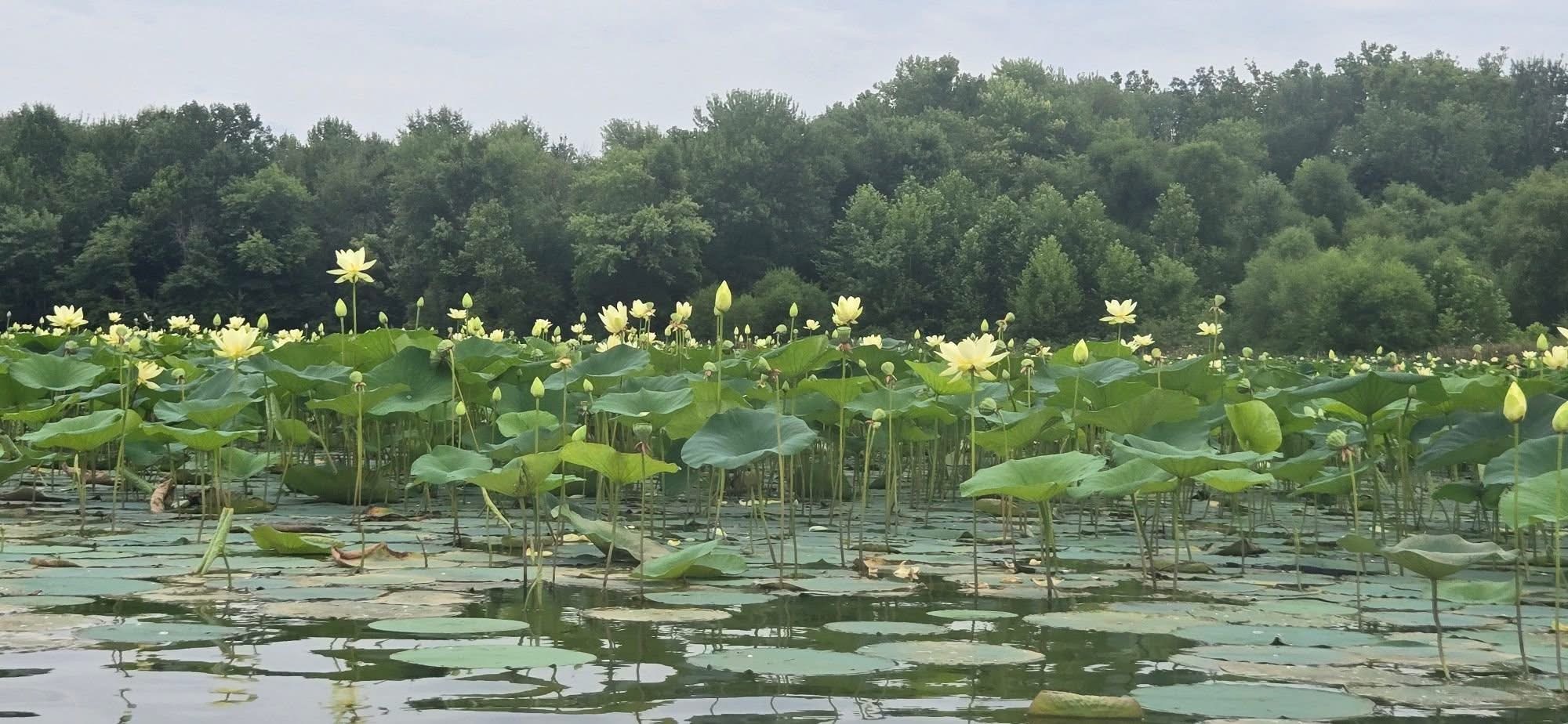
The American Lotus (Nelumbo lutea), also called Yellow Lotus, Yellow Water Lotus, or Water Chinquapin, is one of those native plants that looks almost too exotic to belong here. Huge blue-green leaves rise above the water, creamy yellow blossoms stretch toward the sun, and strange showerhead-shaped seed pods make the whole plant look like something dreamed up for a fantasy swamp.
But this beauty is thoroughly North American. American Lotus is a native aquatic perennial found in shallow lakes, ponds, sloughs, marshes, oxbows, and slow-moving backwaters. It grows from thick rhizomes buried in the muck below, sometimes forming enormous colonies across quiet stretches of water.
Basically, if the swamp decided it needed an official flower, this would be a strong contender.
Flowers
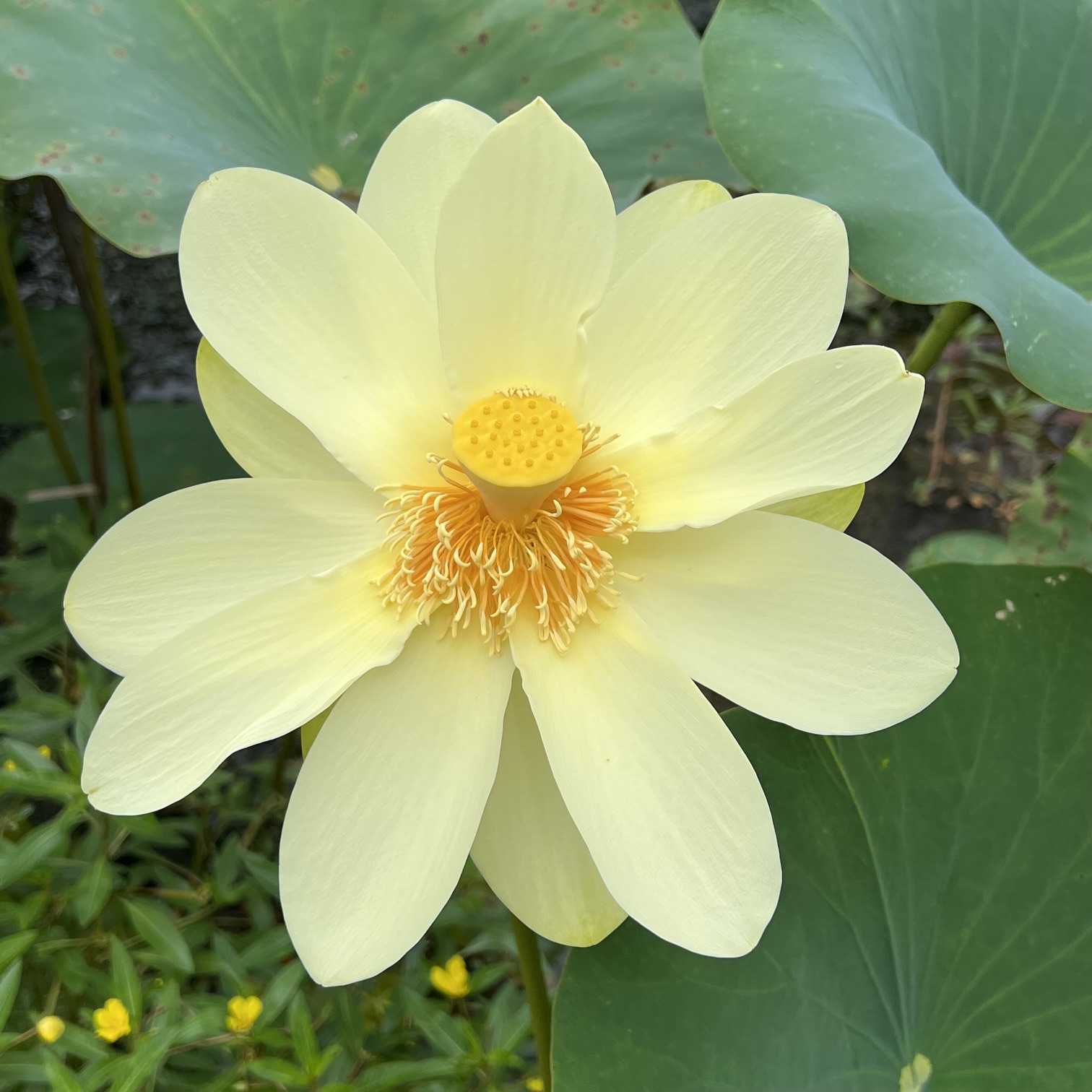
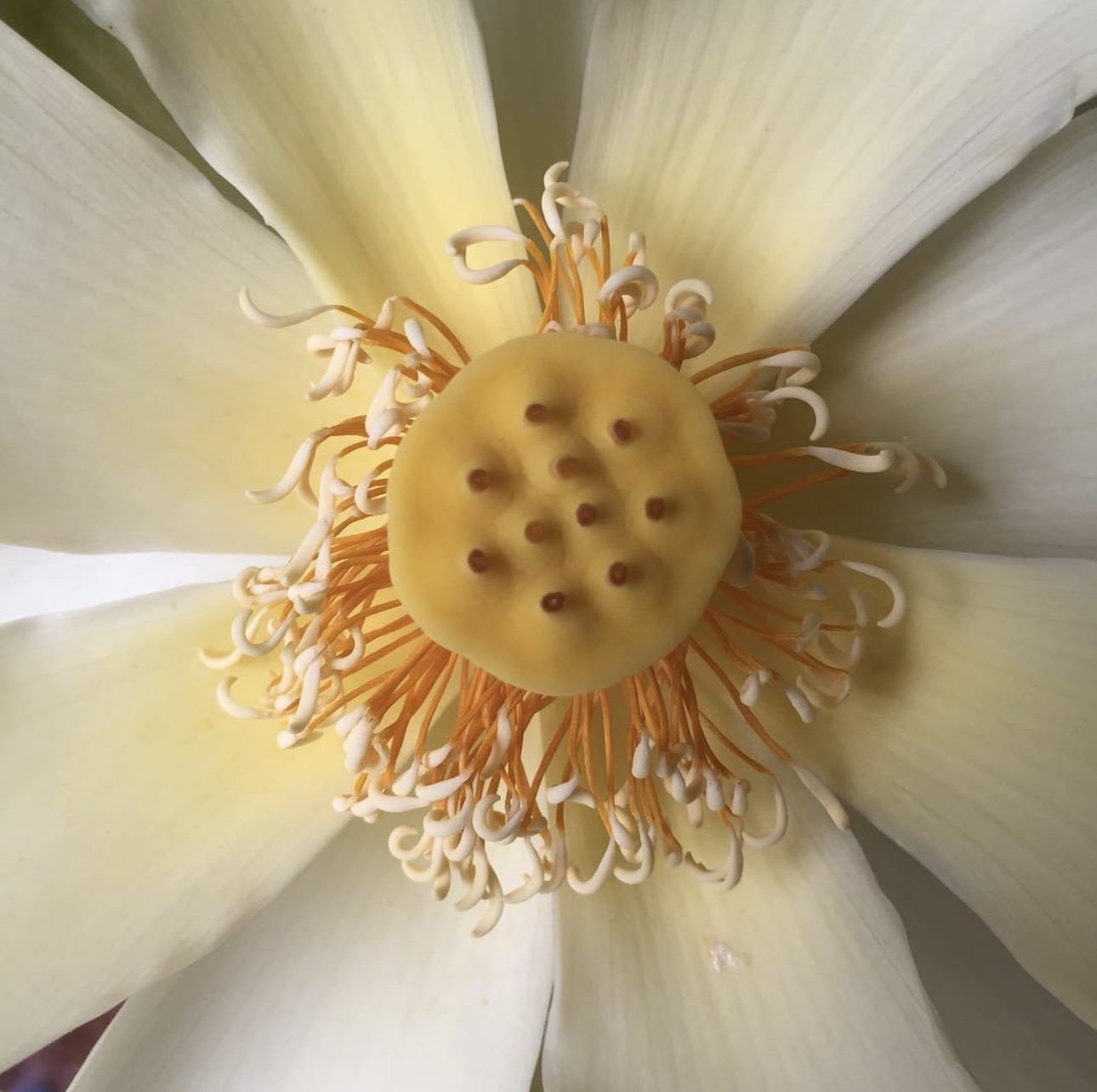
The flowers are spectacular—large, fragrant, pale yellow to creamy white blossoms that can reach around 6–10 inches (15–25 cm) across. They rise above the water on sturdy stalks and typically bloom during summer.
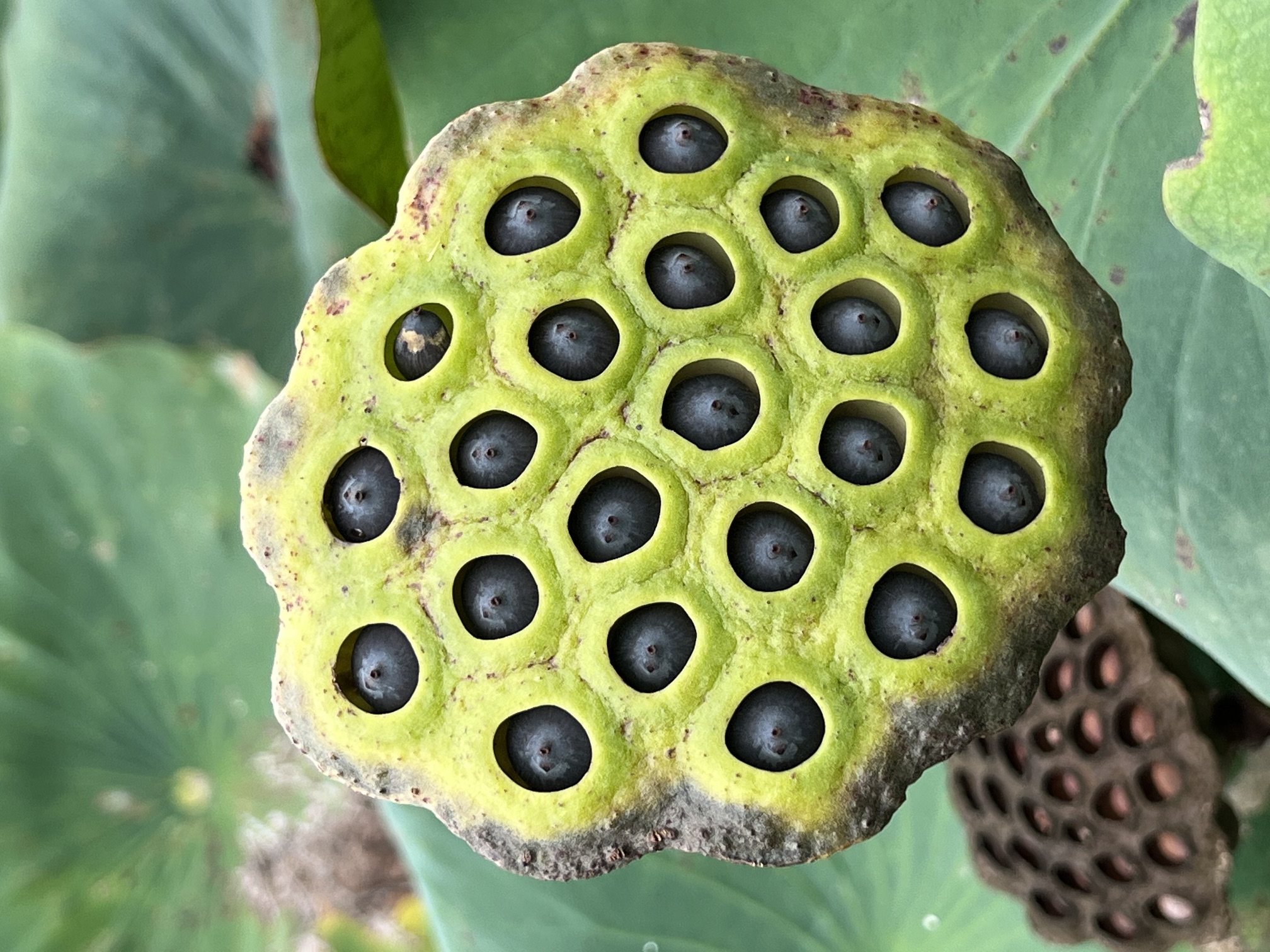
Numerous petals surround a distinctive yellow center that eventually develops into the plant's unmistakable seed pod: a flat-topped structure full of individual holes that looks suspiciously like a tiny showerhead.
The flowers attract a variety of insects, including bees and beetles.
Leaves
This is one of the easiest ways to distinguish American Lotus from many of our other aquatic plants.
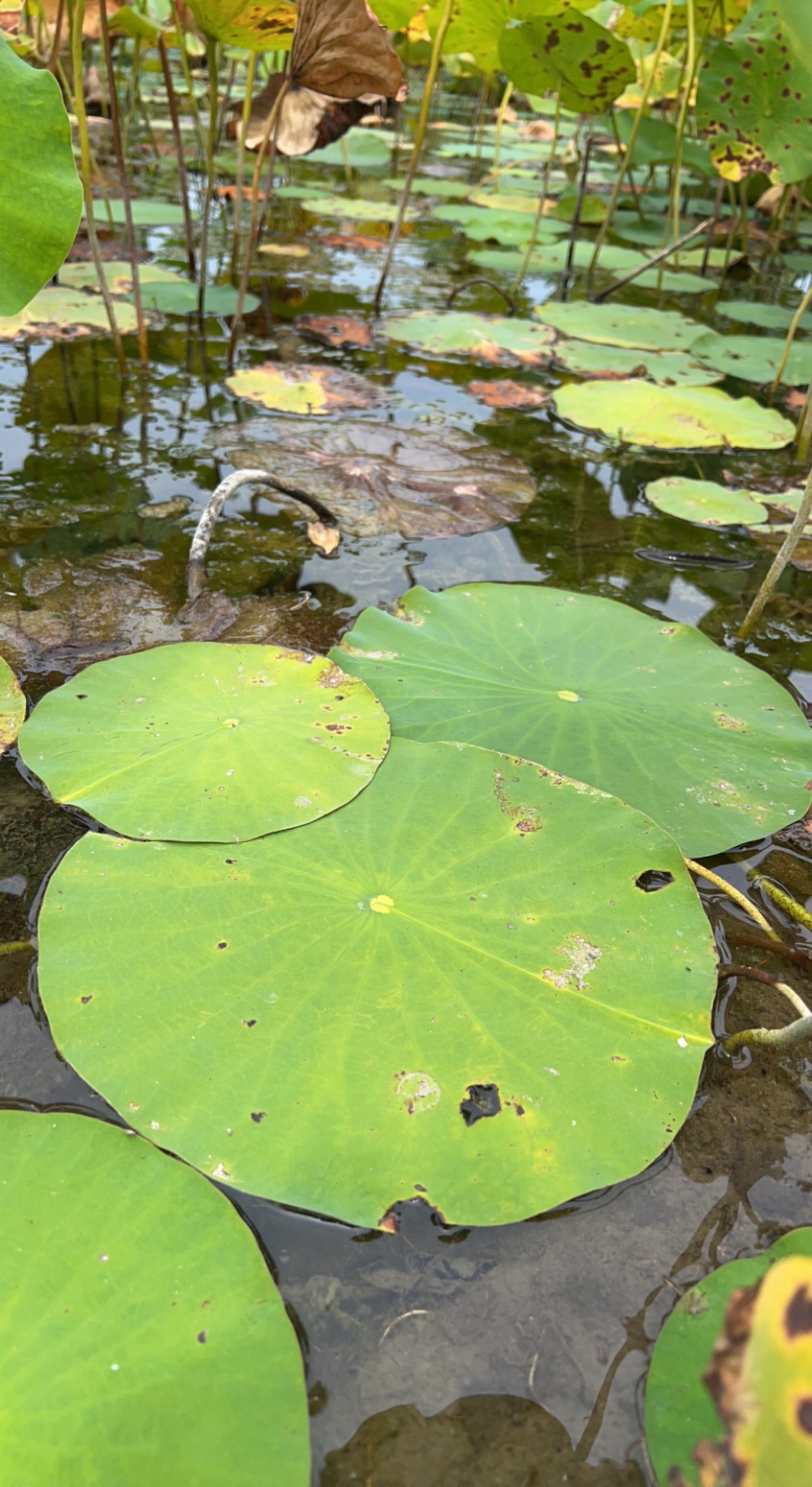
The leaves are enormous, round, blue-green, and often 1–2 feet (30–60 cm) across. While young leaves may float, mature leaves commonly rise several feet above the surface of the water.
The stem attaches near the center of the leaf rather than at a notch along the edge, giving it an almost umbrella-like appearance.
And because the surface is highly water-repellent, droplets bead up and roll around like tiny glass marbles.
Nature apparently invented waterproofing long before we did.
Fruit & Seeds
Once the petals fall, that bizarre central receptacle remains and enlarges into the familiar lotus seed pod.
Each cavity contains a hard, nut-like seed. As the pod matures, it turns brown and woody.
Those seeds aren't just decorative, either. American Lotus was an important traditional food for numerous Indigenous peoples. The seeds were eaten raw or cooked, incorporated into stews, roasted, or ground into meal.
Edible Parts
Young leaves, young shoots, seeds, and rhizomes have a history of use as food, although the rhizomes and seeds are the real stars.
The thick underwater rhizomes are starchy and can be prepared somewhat like potatoes. Historically, freshly harvested rhizomes were peeled and boiled, while others were sliced and dried for storage.
The mature seeds can be shelled and cooked or roasted.
This is also an excellent plant to remind ourselves that “edible” doesn't automatically mean “harvest freely.” Aquatic plants can accumulate contaminants from polluted water and sediment, and local harvesting regulations may apply. Know your water, know your land, and know your laws before bringing dinner home from the marsh.
Key Traditional Uses
American Lotus has a long history of cultural importance among Indigenous peoples of North America, particularly as a food plant.
Its rhizomes provided a substantial source of starch, while the durable seeds could be stored and incorporated into other foods. USDA ethnobotanical material notes that the seeds were eaten raw but were more commonly mixed with vegetables, maize, or meat stews, or roasted and ground into a sweet meal.
The plant also appears in traditional stories and cultural practices—proof that American Lotus has been much more than pretty scenery for a very long time.
How to Harvest and Eat
First rule of harvesting American Lotus:
Do not go tearing apart a healthy lotus colony because you saw somebody fry lotus root on TikTok.
Rhizome harvesting physically disturbs the wetland bottom and removes the part of the plant responsible for future growth. If harvesting is permitted where you are, take very little and avoid sensitive natural populations altogether.
Seeds are a much less destructive option. I prefer young green seeds for a crunchy snack on the go. Mature seeds can be removed from dried pods, shelled, and roasted or cooked.
Rhizomes traditionally were dug from the mud, washed thoroughly, peeled, and boiled.
And never harvest aquatic foods from water contaminated by agricultural runoff, sewage, industrial pollution, or harmful algal blooms.
Field Use
American Lotus isn't just standing around looking majestic.
Dense lotus colonies provide structure and shelter within shallow-water ecosystems. Their leaves create shade below the surface, while stems, rhizomes, flowers, and seeds become part of a larger wetland food web.
Lotus beds also provide resting and feeding habitat for aquatic wildlife while helping stabilize soft sediment with their extensive underground rhizomes.
And then there are the leaves.
Pour a little water onto one and watch it bead together and race across the surface without soaking in. That extreme water repellency is produced by microscopic structures on the leaf surface. This is the same phenomenon famously associated with the “lotus effect.”
So yes, you absolutely have permission to crouch beside the water staring at a leaf while everyone else on the trail wonders what you're doing.
It's science.
Backyard Botanist Field Note
American Lotus is sometimes confused at a distance with water lilies (Nymphaea spp.) or spatterdock (Nuphar spp.).
Look up.
Water-lily leaves usually float directly on the water and have a noticeable notch where the leaf stem attaches. Mature American Lotus leaves are typically held above the water like enormous green parasols, with the stalk attached near the center underneath.
Once you see a mature lotus colony in bloom, though, you're unlikely to forget it.
And that's it for this one. I'm Melissa, and this is Backyard Botanist.
Next time on Backyard Botanist, we'll find another plant growing somewhere it has absolutely no business being this useful—and investigate accordingly.